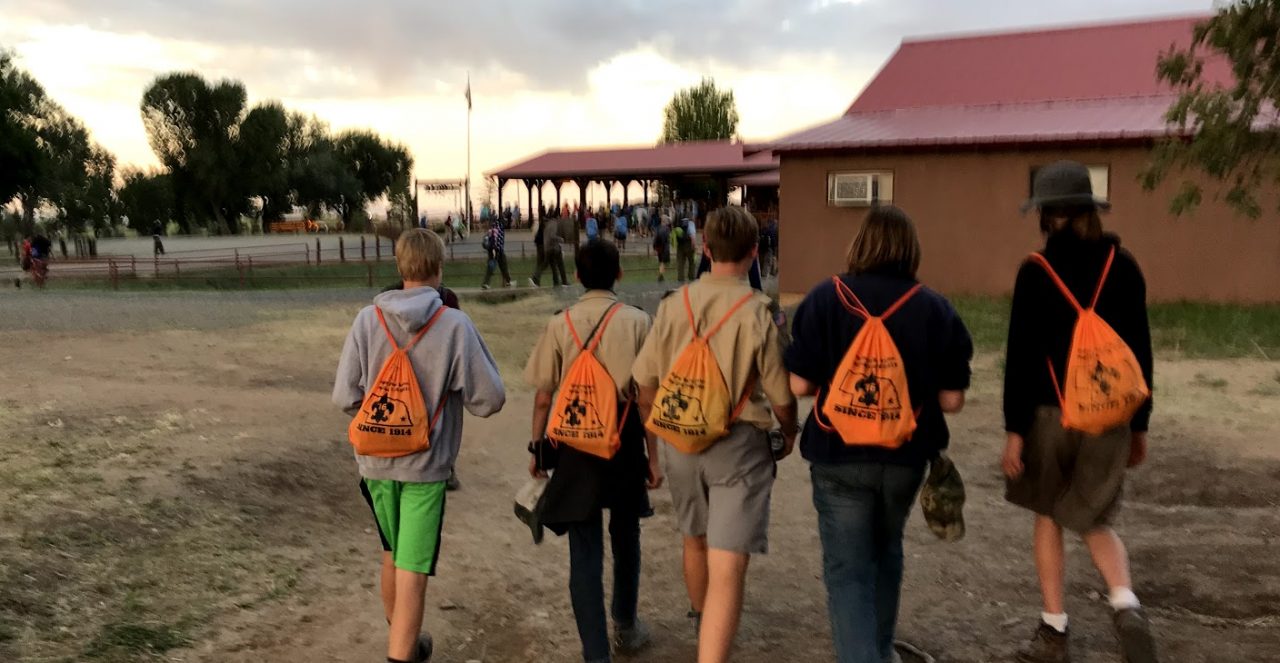
The Boy Scout Handbook has excellent recommendations for a packing list. Here are suggestions our troop has on file.
VERY IMPORTANT
Signed medical release form must be on file. Wear Class A scout uniform on the trip to and from camp
SUGGESTED ITEMS
In a backpack, waterproof duffle bag or plastic bag, pack:
CLOTHING ITEMS
- Jacket or heavy jacket depending on the weather
- Poncho or rain suit with hat or hood
- Hiking boots with thick hiking socks
- Sneakers / boots
- Complete change of clothes daily:
Shirts – season appropriate (fleece/wool)
Under shorts & socks
Pants (avoid away from cotton) - Winter Hat, ski mask (wool)
- Sleeping clothes (sweat suit/poly), hat
- Long Underwear
- Gloves or mittens
- Over pants (ski pants), wind pants
- Plastic bags (keep feet dry)
TOILET KIT
- Chap stick
- Comb
- Deodorant
- Handkerchiefs or tissue
- Medicine – give to scoutmaster with form
- Soap & shampoo
- Toothbrush & toothpaste
- Towel & washcloth
- Toilet paper
CAMPING GEAR
- Sleeping bag (-30)
- Air mattress or pad
- Flashlight with good batteries
- Drinking cup, plate, utensils
- Personal first aid kit
- Pocket knife (Tote’n Chip)
- Scout Handbook
- Insect repellent – no pressurized aerosols
- Sunscreen
- Water Bottle
OPTIONAL EXTRAS
- Camera & film
- Compass
- Duct Tape
- Extra batteries
- Extra boot laces
- Paper and pen
- Pillow
- Rain proof cover
- Scout cap
- Sunglasses
- Swim suit
- Watch
- Whistle
ITEMS TO LEAVE AT HOME
- Liquid fuels of all kinds
- Sheath knives
- Weapons of any kind
- Electronic devices of any kind
- Carbonated drinks
- Lighters and matches

WINTER CAMPING TIPS
Setting Up Camp
✤Look for shelter from the wind.
✤Don’t camp in the bottom of a valley (if hot air rises – cold air sinks).
✤Have southern exposure for your campsite.
✤If there’s no level ground and there is snow, use the snow as a building material to make the tent area level.
✤If there’s snow, pack the snow down around the tent area. Use snow to build a shield from the wind in the kitchen area.
✤Have tent doors at a right angle to the wind.
Keeping Warm and Dry
✤Dress in layers.
✤Use wool socks and sock liners.
✤If you lose a glove, use a wool sock as a mitten.
✤Have good boots that are waterproof. Insulated boots work well.
✤Gaiters are nice to use if there is snow. They keep snow out of your shoes and pant legs.
✤Wear ski pants or a rain suit to help cut the wind and keep you dry.
✤Keep your neck and head covered while you’re in your sleeping bag.
✤Have a good sleeping bag (guaranteed to at least 0°).
✤Have at least one sleeping mat. Two are even better: a self-inflating pad and a foam pad for extra insulation.
✤Wear layers to bed. Take off a layer if you start to sweat.
Food and Drinks
✤Plan to bring enough food so you can eat often.
✤Plan for a good source of water.
✤Bring extra cooking fuel if you plan on melting snow for water.
✤Eat plenty of soup and warm drinks.
✤A thermos is nice to keep soup and drinks warm.
✤Put your water bottle in the center of your backpack. Turn it upside down. This reduces chances that all the water and lid will freeze.
✤Prior to going to bed, boil water and place it in water bottles. Place them in your sleeping bag. This helps keep you warm and you’ll have water to drink in the morning.
Safety
✤Practice the buddy system.
✤If it might snow, bring a length of PVC or electrical pipe and duct tape. This can be used to repair a bent or broken tent pole resulting from heavy snow.
✤For personal items: Bring a first aid kit, sunscreen, chapstick, throat lozenges, and cough drops.
✤In cold weather watch for signs of frostbite and hypothermia The first sign of frostbite is white patches on your skin. Signs of hypothermia are uncontrolled shivering, poor motor coordination, mental confusion and mumbling.
 TABTIC